10 Ideas for Practicing Telling Time at Home

Practice Telling Time at Home

When it comes to learning about time and clocks, teachers can teach the basics in the classroom. However, the best way for kids to really practice is at home or when they’re on the go in the real world. Involve your kids whenever you’re consulting a clock and they will quickly learn to tell time naturally.

If English is your second language, make sure that you are saying times correctly. Review Tanya’s pronunciation tips, and practice the dialogues below.

Here are 10 ideas for practicing telling time at home. Each idea comes with a model dialogue with useful vocabulary and phrases for ESL parents. (more…)
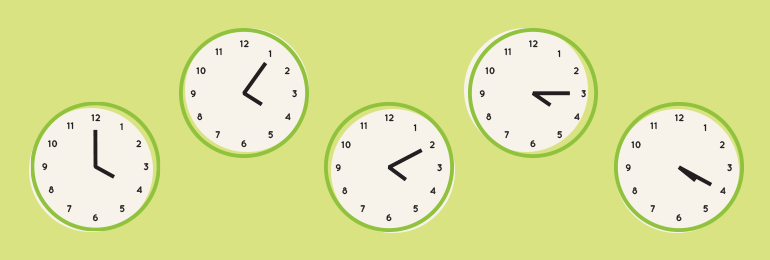
Telling Time: Pronunciation

What time is it?

Everyone needs to know how to tell the time. Even if English language learners know how to express clock time in their native language, they might not be familiar or comfortable doing so in English. As a follow-up to our new, kid-friendly Telling Time lesson, I thought I’d record the pronunciation of the times in the lesson so that learners can clearly hear and practice how to express them. I hope this will make your students feel more confident the next time someone asks them, “What time is it?” (more…)

Telling Time

What time is it? Telling time is an important skill, and our new Word Bank lesson makes it easy to learn!

Our Telling Time lesson includes a picture dictionary with 13 common clock settings, a matchup, a word choice, and a spelling bee. We’ve made sure that this lesson includes the different, common ways of saying and writing the time (in numerical and alphabetical forms—e.g., 4:10, four ten, or ten after four). The variety and repetition of these exercises will ensure your young learners get plenty of practice without getting bored! Discussion questions at the end allow your students to practice talking about clock time in context. (more…)