Writing Activity: My Acceptance Speech

“This is a terrible mistake, because I used up all of my English!”

~ Roberto Benigni, accepting his Academy Award for Best Actor in “Life is Beautiful” (2010)

Did your students watch the Oscars this week? What was their favorite part? Did they enjoy watching the stars on the red carpet, or the live musical performances? Maybe they got a kick out of Ellen’s selfie that broke Twitter, or the pizza man who brought Brad Pitt and his friends pizza!

I often let my daughter stay up late to watch awards shows like the Oscars or Grammys. She’s a dreamer with big aspirations, and I think it’s important for kids to see people achieving their dreams. While my daughter’s favorite part of awards shows is seeing the pretty dresses (her dolls were all dressed up for the occasion this year), my favorite part is always listening to the acceptance speeches. Who are the winners going to thank, and why? What secrets do they have for dreamers who are still trying to achieve their goals?

This year Jared Leto, winner of Best Supporting Actor, gave the best speech! Here is the transcript of Leto’s speech. His speech told a story, and it came from the heart. It captured the audience’s attention, and he didn’t rely on a crumpled up piece of paper.

An Inspiring Video

One of the most memorable speeches in the history of the Academy Awards was delivered by Robert Benigni in 2010. (more…)

How to Write a Paragraph

Whether they love it or hate it, writing is an essential skill for English learners to acquire. Writing also incorporates many other skills: grammar, vocabulary, spelling, punctuation, syntax, organization, etc. For teachers, writing can demonstrate whether or not a student has truly understood a grammar target, and a student’s writing can point to specific areas he or she needs to work on (e.g., forgetting to use articles such as a or the, using the simple past when the present perfect is required, etc.).

There are many ways that writing can be incorporated into the classroom. Blogs, journals, essays, and stories are a few common writing exercises to try. At the heart of almost all writing, though, is the need for a good, well-organized paragraph. Learning the structure of a typical paragraph means students will feel like they have a “guide” to follow. Writing can be daunting, so starting with a how-to lesson is an excellent idea!

Paragraph Structure  (more…)

Pronunciation Game – A Plural Party

Tricky Plural Nouns

Our teaching theme on Sprout English this week is all about the pronunciation of plural nouns. As Tanya pointed out in her recent post, plural endings are tricky. My own son, who is a seven-year-old native English speaker, has difficulty with plural endings. He often ends up tongue-tied when trying to pluralize words that end in “th” (/θ/), such as “months”, or “st” as in “nest”. His tendency is to change the /θ/ to /f/, which is easier to say, or to give the word an /Iz/ ending (nestIZ) rather than the trickier /s/ ending. Helping him work on his pronunciation when the problem comes up (without making a big deal out of it) is my current approach as a parent.

As a teacher, it can be difficult to find time to work one-on-one with kids who are having pronunciation problems. Finding games that the whole class can play is a great way to help individuals without making them feel uncomfortable. One game that can be adapted in a variety of ways is the traditional memory game “In My Suitcase”. In this game, students sit in a circle and take turns adding items (orally) to an invisible suitcase.

I am going on a holiday. In my suitcase I will bring…an alligator.

The second person repeats the first item and adds a second item with the next letter in the alphabet:  (more…)

Pronunciation of Plural Endings

Let’s face it—English pronunciation is difficult! Where some languages have only 5 vowel sounds, English has 26. Some languages have a limited set of consonant sounds, but English has tricky combinations like /th/. (Note: When we write sounds, we enclose them in slashes / /). And don’t even get me started on diphthongs (vowel-consonant combos like /ow/). There is a lot for students of English to learn!

On top of all the vowel and consonant sounds, students need to learn the pronunciation of endings that change according to the last sound of the word. For example, the past tense ending -ed can be pronounced as /t/, /d/, or /ɪd/ depending on the last letter of the verb. The case I’ll deal with today involves plural endings. I’ll use the International Phonetic Alphabet (IPA) in this post. Listen to the audio examples at the end of this article for pronunciation practice. But if you’re still confused by the IPA symbols, leave me a comment below and I’ll give you some more examples.

Whether you’re a teacher, a parent, or a student, I hope this blog post will help you with the pronunciation of plural endings!

1. Pronounce the plural ending as /s/ following voiceless consonants. (more…)

Animal Battle – An ESL Card Game for Practicing Comparative Adjectives


Are you looking for some fun games to keep your young learners interested in English? This week’s Spotlight features a set of playing cards with animal names and pictures. Tanya has already shared some fun card games to play with Sprout English’s card sets. Here’s another fun game that you can play to introduce or practice using “would”. This game is also useful for practicing comparative adjectives.

How to Play “Animal Battle: Who Would Win?”

This game is similar to “War”, the card game of chance where players face off and try to collect all of the highest cards from their opponents. The difference between “War” and “Animal Battle” is that Sprout’s playing cards have no numbers! Students have to decide who would win in each battle. They have to use comparative adjectives to win the cards. At the end of the session, one student in the class will be declared “King or Queen of the Jungle”.

1. Print 
Print a few sets of Animal Playing Cards from Sprout’s Games Room and divide your class into pairs. (This game could also be done in groups of four where students work as one pair against another pair.) If there is an extra student, ask for a volunteer to be a park ranger. The teacher must also be a park ranger (referee). (more…)

Tell Me About It! 15+ Fun Apps and Tools to Get Children Speaking

“Everything becomes a little different as soon as it is spoken out loud.” – Hermann Hesse

When I first began teaching children, I struggled with providing opportunities for all to voice their learning equally. Often, the most vocal students answered questions or took charge in games or group work. The shy students remained silent. With web tools and apps we now have the ability to ensure all our students get to voice their opinions and reflections about the content. With these tools, kids can tell stories, practice vocabulary, or tell us about themselves. Many allow kids to create videos that can be posted on a class website, wiki, or blog or sent to parents and friends. These recordings allow parents to see the learning taking place and evaluate their child’s growth throughout the year. Additionally, many make it fun for even the shyest student to want to participate. Below are a few free tools and apps created with kids in mind.

Web 2.0 Tools

With these free web tools, students can create stories, practice vocabulary, sing songs, or pretend to be the characters they read about. They can work with their peers and practice role-plays or dialogues that they are learning. Kids can also send fun greetings to friends and family, because many of these tools have templates and backgrounds to celebrate Valentine’s Day, Christmas, and other holidays. (more…)

9 Ways to Use Cards & Flashcards in Class

Teaching from a textbook all day can be tedious for both students and teachers. Breaking up the time with interactive warm-ups, filler, and wrap-ups makes the lesson engaging and fun! One way to do this is with cards—both flashcards and playing cards. Using cards in the classroom also lets you sneak in some learning while your students think you’re just playing a game. Young learners, especially, respond well to games, and if the games are educational, there’s no reason to limit their use! Games can involve speaking, vocabulary, grammar, etc., but today I’ll focus on ways to use vocabulary cards.

Card & Flashcard Games:

Try the following games with Sprout’s cards in the Card Games section of the Games Room. We have image/word card sets on animals, clothes, farm animals, fish and reptiles, fruit, jobs, prepositions, verbs, and adjectives! (more…)

Valentine’s Day Game for Young Learners – Practicing Gerunds


Are you looking for a fun, yet educational, game to play with your English learners on Valentine’s Day? Here’s a Valentine’s-inspired activity for practicing gerunds!

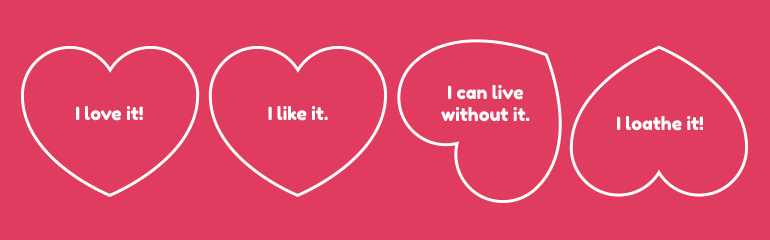
How to Play “Love, Like, Live Without, Loathe”

1) Review
Review the differences between “love” and “like” and review how to use these before a gerund:

  • I like eating chocolate.
  • I like eating peanut butter.
  • I love mixing chocolate and peanut butter.

2) Introduce Vocabulary
Teach your students two more words and expressions: to be able to “live without” (to not need or to not like a lot), and to “loathe” (to really dislike).

  • I can live without vegetables.
  • I loathe broccoli. (more…)

Valentine’s Day – Capitalization, Punctuation & Spelling

Love is in the air! Valentine’s Day will be celebrated in many countries this Friday, February 14. Some schools participate in Valentine’s Day activities such as doing lessons about love/dating/marriage, wearing pink or red, or giving out valentine cards, roses, or chocolate. If you will be discussing Valentine’s Day with your young learners this week, make it educational and teach them the capitalization, punctuation, and spelling rules of this popular holiday!

Capitalization

In English, holidays always use capital letters for the holiday name and the word “Day”.

  • I’m looking forward to Valentine’s Day.

When it’s clear we’re referring to the holiday, we can drop the word “Day” if we want.

  • I got a ring for Valentine’s Day.
  • I got a ring for Valentine’s.

But be careful! We don’t use capital letters when referring to a card, gift, or person.

  • He gave me a valentine card yesterday.
  • I bought a valentine present for my girlfriend.
  • You will always be my valentine. (more…)