
Please see Independence Day & Canada Day Vocabulary Lessons for an updated post.

For those living in, teaching in, or hailing from Canada or the US, happy soon-to-be Canada Day and Independence Day! Canada Day is a federal holiday celebrated on July 1 that commemorates the
July 1, 1867, signing of the Constitution Act. Independence Day, also known as the Fourth of July, is a federal holiday that commemorates the adoption of the Declaration of Independence on July 4, 1776. With these holidays fast approaching, the team at Sprout English and ESL Library has been busy creating new lessons, updating old ones, and blogging about related grammar and activities!
I chose my blog topic for today based on a question I had while editing ESL Library’s Independence Day lesson. The lesson included several instances of “July 4th”, and I had to decide if that was the best way to present dates. Should we use ordinal numbers (e.g., 1st, 4th) or cardinal numbers (e.g., 1, 4)? What do the style guides have to say? (more…)

Turn this popular kids’ food into a lesson! Your young learners will enjoy learning about Pizza and how it’s served all around the world.
Our Pizza lesson in the Discovery Center includes discussion questions, pre-reading vocabulary, a short reading full of interesting facts, comprehension questions, vocabulary review, and a word maze. There is even an optional black-and-white title page for your students to color.
Check out our blog this week for related grammar tips and an activity. On Tuesday, Tanya will blog about Some Vs. Any—get students to practice these quantifiers while talking about pizza in her suggested activity. On Thursday, Tara will blog about a fun food-related activity to try in class: Countable or Uncountable Food: Our Buffet!
Do your students get confused by all of the different quantifiers in English? There are many ways to indicate the amount of a noun, including using words like many, much, a lot, lots, some, several, a few, a couple, etc. The common term some is used when we want to indicate an amount that is not too much and not too little. But can we use some in all types of English sentences, including positive statements, negative statements, and questions? Sometimes we need to use any instead, and that can be a source of confusion for English language learners! Teach your students the differences using the tips below, and get them to try the practice exercise below.
In English, we usually use some in positive sentences. Some is used with both count (countable) and non-count (uncountable) nouns.
Examples: (more…)

Will your students be watching the World Cup this year? The 2014 FIFA World Cup takes place in Brazil from Thursday, June 12 to Sunday, July 13 with 32 teams competing. The world is abuzz with excitement! Did you know that soccer is the world’s most popular sport? It is played by 250 million players in over 200 countries. It even has two different names—it is known as “soccer” in Canada and the US and “football” to the rest of the world.
Classroom management can be an ongoing challenge at the best of times. When everyone is excited about something shared the world over, it can be even more difficult to keep the peace. At my old school, we used a red card/yellow card management system during the World Cup. This worked very well because it got everyone into the spirit of the games while also reminding everyone that misbehaving wouldn’t be tolerated. (See chart below.)

Excitement is building all around the world for the 2014 FIFA World Cup, which takes place in Brazil from June 12 to July 13. Kids usually get energized by anything sports-related, so get them into the spirit of the games with our featured vocabulary lesson on Soccer (Football)! (We’ve included both of the sport’s common names in our title because we have subscribers from all over the world. For those of you who might be unaware, this sport is known as “soccer” in the US and Canada and “football” to the rest of the world.)
In this eight-page Word Bank lesson, students will learn nine words associated with soccer, including soccer player, goalie, team, soccer ball, cleats, goal, score, kick, and run. (more…)
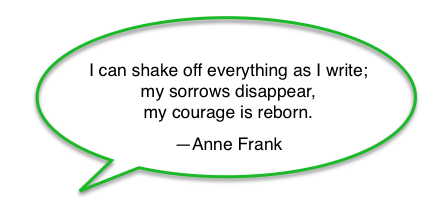
Most English language learners struggle with writing, and it often goes beyond being unsure about grammar and vocabulary. More importantly, they might be unfamiliar with the structure of a paragraph or an essay. How to Write a Paragraph includes a sample paragraph and tips that will give your students some guidance. But what about actually starting that paragraph or essay? Sometimes getting started is the hardest part! Below are two common techniques that students can easily use to pull readers into their writing and get their pens moving (or their fingers typing).
This is a great technique to grab readers’ interest. Have students come up with a question that’s related to their topic. A question like this helps students think about what they want to answer/address in their paragraph/essay, and lets readers know what to expect from the writing.
Common ways to start such a question are: (more…)

When it comes to writing, students often don’t know where to begin. A writing task like Music – Writing Activity is helpful because there are four questions to guide them. Combine that with our tips on paragraph structure, and your students will be writing with ease!
Writing improves many English skills such as grammar, spelling, punctuation, and sentence structure. You can also incorporate speaking, pronunciation, and listening into this writing project. Put students into small groups after they’ve finished writing, and have each student read their paragraphs aloud. They can practice pronunciation while the others practice listening. Also, tell the listeners that they must come up with one related question each to encourage discussion! (more…)
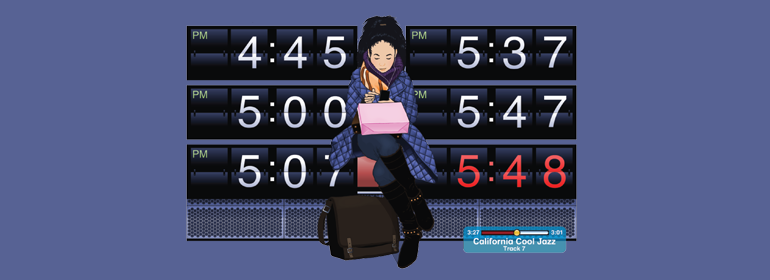
The past progressive (also called the past continuous) is used when comparing two past actions where one is longer than the other. The past progressive is often used when describing emergencies and natural disasters. February 1, our featured story on an earthquake, provides plenty of examples of this tense in a natural context.
All of the readings in our Library section can be done on paper or online, so teachers can choose how to present the reading and comprehension questions. Have your students do it on paper or in a computer lab during class, or assign it for online homework and do the follow-up activities in class the next day. This lesson also includes a grammar exercise, a word search puzzle, and an interview activity.
Other past progressive resources: (more…)


