
Are your young learners familiar with the past progressive? Show them this tense (also known as the past continuous) in context in our anti-bullying story about a fighter called Souljah31. (more…)

This week’s Spotlight lesson, Cathy and Nate, includes two stories about young love. Cathy’s story uses the simple present, present progressive, simple past, and simple future tenses in context, while Nate’s story focuses on the modal “must.” (more…)
“Don’t tell me the moon is shining; show me the glint of light on broken glass.”
—Anton Chekhov
Writing is a skill that English learners usually find challenging. Writing in a second language is even tougher. Not only do students need to understand and apply grammar, spelling, and punctuation rules, but they also need to know how to compose a paragraph, story, or essay! Guiding learners step by step through the writing process can help—check out How to Write a Paragraph and our Writing section in the Project Depot for tips and writing activities.
Another way to help students write is to teach them ways to start a story. The past progressive (past continuous) verb tense is a great way to create atmosphere and set the mood of a story. For a good example, our Spotlight lesson this week, UFO Report, uses the past progressive to set the scene of the story. In that lesson, students will also practice using the past progressive by writing the first few lines of various stories. (more…)

The past progressive (or past continuous) is an English verb tense that’s not used very often, so students are usually unclear about when to use it or how it compares to the simple past. Seeing the simple past and past progressive together in the same text really helps students figure out when to use each one. This week’s Spotlight lesson, UFO Report, features a reading and exercises that compare both tenses. (more…)
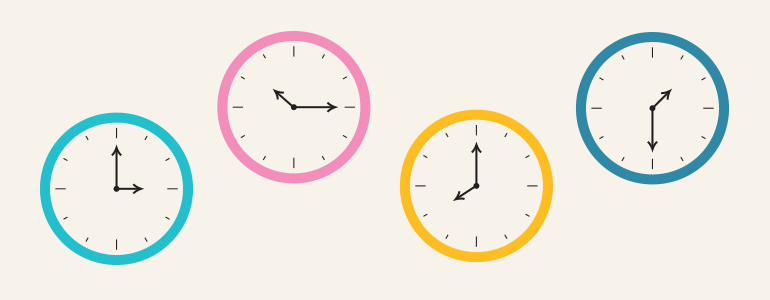
This week in the Spotlight, we’re featuring a lesson from our Library on the Past Progressive. An easy way to start practicing the past progressive is with clock times. Kids love talking about themselves and their lives outside of the classroom. Try this activity after you’ve reviewed the structure of the past progressive.
Print this FREE 3-page PDF to use with the “What were you doing?” activities below.
Page 1: Print as many copies as you need of the Time of Day sheet. Cut the clocks out, and give each student one or more clocks to fill out. Have an envelope or container handy to put the clocks in after students write times on them.
Page 2: Print one page of Days of the Week strips for the class and cut them into strips. Place them in an envelope or container.
Page 3: Print one Day Planner page for each student for the Personal Assistants activity.
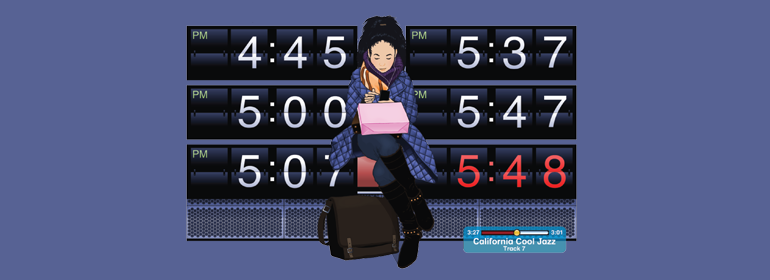
The past progressive (also called the past continuous) is used when comparing two past actions where one is longer than the other. The past progressive is often used when describing emergencies and natural disasters. February 1, our featured story on an earthquake, provides plenty of examples of this tense in a natural context.
All of the readings in our Library section can be done on paper or online, so teachers can choose how to present the reading and comprehension questions. Have your students do it on paper or in a computer lab during class, or assign it for online homework and do the follow-up activities in class the next day. This lesson also includes a grammar exercise, a word search puzzle, and an interview activity.
Other past progressive resources: (more…)


