Writing: Using the Past Progressive to Create Atmosphere in a Story

“Don’t tell me the moon is shining; show me the glint of light on broken glass.”
—Anton Chekhov

Writing is a skill that English learners usually find challenging. Writing in a second language is even tougher. Not only do students need to understand and apply grammar, spelling, and punctuation rules, but they also need to know how to compose a paragraph, story, or essay! Guiding learners step by step through the writing process can help—check out How to Write a Paragraph and our Writing section in the Project Depot for tips and writing activities.

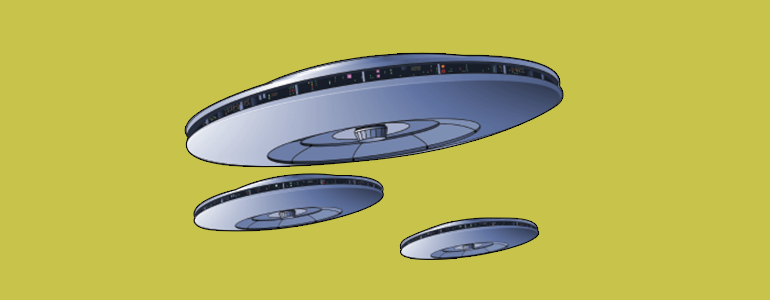
Another way to help students write is to teach them ways to start a story. The past progressive (past continuous) verb tense is a great way to create atmosphere and set the mood of a story. For a good example, our Spotlight lesson this week, UFO Report, uses the past progressive to set the scene of the story. In that lesson, students will also practice using the past progressive by writing the first few lines of various stories. (more…)
UFO Report – Past Progressive Reading

The past progressive (or past continuous) is an English verb tense that’s not used very often, so students are usually unclear about when to use it or how it compares to the simple past. Seeing the simple past and past progressive together in the same text really helps students figure out when to use each one. This week’s Spotlight lesson, UFO Report, features a reading and exercises that compare both tenses. (more…)

Teaching the Present Perfect

The present perfect is a very common verb tense in English, but it can be confusing for students to learn because it has two main uses that are quite different from one another. Adding to the challenge is the present perfect’s similarity to the simple past and the present perfect progressive. In my experience, most textbooks teach the two main uses separately, and some students never realize that this verb tense can do two different things.

Also, most textbooks don’t include an exercise that combines the present perfect and the simple past. It’s easy enough to produce have + past participle over and over in a written or spoken exercise—the real challenge lies in recognizing the difference between the present perfect and the simple past and being able to produce the correct tense.

Below is a grammar explanation that highlights the two main uses of the present perfect. The simple past and present perfect progressive are also discussed, and a worksheet comparing the present perfect and simple past is available on page 3 of the handout. We hope this handout helps your students understand and use this common tense! (more…)

Pronunciation of Past Tense Endings

Many languages have a one-to-one spelling-pronunciation relationship, but the English language has no such thing! This is why English pronunciation is difficult for learners to master. On top of the 26 vowel sounds and many tricky consonant sounds such as “th”, students need to learn the pronunciation of endings that change according to the last sound of the word. For example, the past tense ending -ed can be pronounced as /t/, /d/, or /ɪd/ depending on the last letter of the verb. Luckily there are rules for such cases!

Today’s blog post was inspired by this week’s Spotlight lesson, Juan and Sofia – Simple Past Reading, which has an exercise on the spelling rules for adding -ed (the past tense ending of regular verbs). I thought it would be helpful to blog about the different ways of pronouncing the -ed ending. Note that I use the International Phonetic Alphabet (IPA) in this post. Play the audio examples at the end of this article for pronunciation practice for your students or children.

1. Pronounce the -ed ending as /t/ following voiceless consonants. (more…)

Juan and Sofia – Simple Past Reading

Are your students or children ready for a review of the basic verb tenses? This week’s Spotlight lesson, Juan and Sofia – Simple Past Reading, includes the simple present, present progressive, and simple past tenses, and will engage your kids with a hilarious story and fun, educational activities!

This lesson includes a short reading, comprehension questions, sentence puzzles, a crossword, and a group discussion activity to review the simple present, present progressive, and simple past. There is also a helpful spelling review on forming the past tense of regular verbs.

All of the readings in our Library section have a digital component, so teachers and parents can choose how to present the reading and comprehension questions—either on paper or online!

Other simple past resources: (more…)

February 1 – Past Progressive Reading

The past progressive (also called the past continuous) is used when comparing two past actions where one is longer than the other. The past progressive is often used when describing emergencies and natural disasters. February 1, our featured story on an earthquake, provides plenty of examples of this tense in a natural context.

All of the readings in our Library section can be done on paper or online, so teachers can choose how to present the reading and comprehension questions. Have your students do it on paper or in a computer lab during class, or assign it for online homework and do the follow-up activities in class the next day. This lesson also includes a grammar exercise, a word search puzzle, and an interview activity.

Other past progressive resources: (more…)

Achievements & Records

Have you discussed goals and resolutions for 2014 with your students? One way to lead into a discussion about future goals is to remind your learners of what they’ve already accomplished in the past! Sprout English‘s lesson of the week is Achievements & Records in the Grammar Stories section of the Grammar School. (more…)

Turn Off the TV – Dialogue

Turn Off the TV, in the Simple Past Dialogues 2 category of the Conversation Station, is Sprout English’s lesson of the week.

This one-page dialogue is the perfect way to review the simple present, present progressive, and simple past. All three tenses are used naturally in this conversation between a father and his daughter. The topic of a parent wanting a child to stop watching TV and go study is something kids can definitely relate to! (more…)

Zero Prep Simple Past Warm-Up – Remembering Yesterday

This week on Sprout English, students are practicing the simple past tense. Here is a warm-up you can try with your students after you’ve introduced the simple past. This activity requires zero preparation and is great for practicing irregular verbs. It is also useful for practicing question formation. All you need is a piece of paper, a pen, and a small container. It might get loud!

Remembering Yesterday (more…)