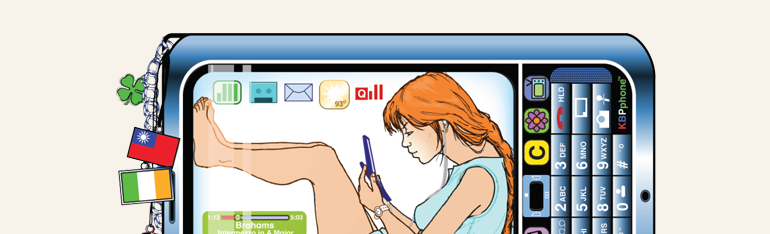
Do your students all have their own cell phones? If they don’t, they probably wish they did! Mobile phones are so prevalent in our culture these days, so our Mobile Phone – Reading Lesson will be relevant and fun for your young English learners.
(more…)
simple present
Baseball: Simple Present Reading
The 2015 Major League Baseball season runs from April 5 to October 4 in the US. Our Spotlight lesson, Baseball: Simple Present Reading, introduces young learners to a boy who loves playing baseball.
(more…)
Valentine – Simple Present Reading
Young learners will feel more confident in their English abilities when they learn how to introduce themselves properly. Our Spotlight lesson this week, Valentine – Simple Present Reading, provides a good example of how to introduce yourself in English.
(more…)
Movie Poster Activity: Practicing the Simple Present & Present Progressive
Have you tried this week’s Spotlight lesson with your English learners? In this lesson, Pako, a young actor from Brazil, is starring in a movie. The reading and exercises in this lesson focus on a movie poster. Students complete exercises that review the simple present and present progressive tenses.
You can extend this lesson by having your students create their own movie posters! These posters will be a great addition to your classroom walls.
Movie Poster Activity
1. Make sure that your students are familiar with how to talk about themselves using the simple present and present progressive tenses. Use the lesson Pako from Sprout English’s Library to review these tenses.
(more…)
Simple Present Vs. Present Progressive – Grammar Worksheet
Students learn the simple present and present progressive verb tenses early on in their English language studies. The problem is that most textbooks don’t present these tenses together! It’s easy enough to remember the conjugation of one tense and practice it over and over. It’s quite another when both tenses appear in the same context—that’s when students really have to understand the differences in order to use the correct tense. Our Spotlight lesson this week, Pako – Simple Present / Present Progressive Reading, uses both tenses in the story so that students can see them compared and contrasted.
We’ve got many resources to help your learners figure out the differences between these tenses. Go over our free, printable grammar chart on the simple present vs. present progressive with your students, then print out the worksheet below and see how they do. If they are still confused, try some of our other resources at the end of this post!
Pako – Simple Present / Present Progressive Reading
The present tenses are fairly simple to master on their own, but students can get confused when they’re paired in the same context. Seeing the simple present and present progressive together in the same text really helps students figure out when to use each one. This week’s Spotlight lesson, Pako, features a reading and exercises that use both tenses. (more…)
There Is / There Are
A lesson on there is / there are is useful for low-level students for many reasons. It uses the simple present, a very common verb tense. It demonstrates subject-verb agreement. It introduces students to prepositions of place (since we often mention a location in this type of sentence). And students will also learn vocabulary on food and containers in our There Is / There Are lesson! (more…)
Juan and Sofia – Simple Past Reading
Are your students or children ready for a review of the basic verb tenses? This week’s Spotlight lesson, Juan and Sofia – Simple Past Reading, includes the simple present, present progressive, and simple past tenses, and will engage your kids with a hilarious story and fun, educational activities!
This lesson includes a short reading, comprehension questions, sentence puzzles, a crossword, and a group discussion activity to review the simple present, present progressive, and simple past. There is also a helpful spelling review on forming the past tense of regular verbs.
All of the readings in our Library section have a digital component, so teachers and parents can choose how to present the reading and comprehension questions—either on paper or online!
Other simple past resources: (more…)
Be Verb Practice: Be Yourself
Have you tried Sprout English’s NEW Simple Present Be Verb lesson plan? This new lesson is adorable, fun, and very useful for introducing the Be Verb to young beginners. After you use this lesson, you’ll need some fun games and activities to reinforce the language structure. Here’s one idea to try:
Be Yourself Game
1. Start by placing a word on the board that describes a few of the people in your class. For example: a nationality (African), gender (male, a boy), or age (10 years old). Tell your students to raise their hands if this word or phrase applies to them. Introduce one word at a time. Move on to appearances, personalities, and moods that can be used with the Be verb (e.g., brunette, blond, tall, short, smart, friendly, hungry). (more…)
How to Introduce Yourself in English
This week’s Spotlight lesson is our new Simple Present – Be lesson, where language learners can get a lot of practice introducing themselves. Introductions are one of the first things students need to learn to do in a new language. Feeling confident and comfortable doing so can go a long way to making language learning an enjoyable experience.
Like most (if not all) languages, there are a variety of ways to introduce ourselves in English, and we don’t want our students freezing up in the real world if they hear a variation from what they practiced in class. That’s why dialogues that show possible variations (such as the free, printable dialogue below) are great—students can see other ways of saying the target phrase and repeat the basic conversation several times without getting bored.
For listening practice and as a model before the students try it themselves, play the audio clip at the bottom of this post or ask for two volunteers. (more…)