“I dislike feeling at home when I am abroad.” ~ George Bernard Shaw
This week’s Spotlight lesson plan is all about the Great Pyramid of Giza. Have your students traveled to interesting places? Do they enjoy learning about mysteries?
One way to have fun with mysteries is to have your students make word clouds about their vacations and travels. I play a word cloud guessing game with my online learners every time I go on a trip. We do this activity together on my teaching blog, but it can also be done in pairs or small groups in class with a printout or handmade word cloud. The best way to play this game is to demonstrate once (as the teacher) with your own travel memories. Your students will love getting to know you better by learning about a trip you took.
1. Brainstorm
Brainstorm about ten interesting memories from a trip you’ve taken. Look through your photographs for ideas.
2. Make a List
Write a word or two to represent each memory. It can be a noun, verb, adjective, or short phrase. (If you have pictures of these memories, bring them in to class!) I just returned from a trip to New York City. Here are my words.
lock
celebrity
grand
headphones
crash
dream
Shorty Awards
cheesecake
painting
3. Make a Word Cloud
Choose a Word Cloud generator. I like Wordle the best, but here are bunch of Word Cloud alternatives suggested by Shelly Terrell. Paste your words into the generator and make a word cloud to represent your trip. Add the name of the place you visited to your list.
 Tip: To make the place name larger, type it a few times. On Wordle, you can keep two or more words together by typing it like this: New~York~City. Some generators will have other methods.
4. Show and Guess
Show your word cloud to your students and have them take guesses about your memories. They can guess with a partner or out loud directly to you.
Useful Starters for Taking Guesses
I wonder if you …
I bet you …
I think you…
Did you ….?
You didn’t…., did you?
Re: “locks”
“I bet Teacher Tara locked herself in the bathroom in NYC.”
“I wonder if she locked her keys in the rental car.”
“Did you lock your passport in your hotel safe?”
Re: “painting”
“I bet you went to the Metropolitan Museum of Art and saw some famous paintings.”
“I wonder if she bought a painting of New York City for her house.”
“I think she saw some street artists painting pictures of New York City.”
5. Reveal the Truth
Tell your students if they guessed correctly or not. Show a photograph related to the memory if you have one. I usually try to use words related to memories that I have photographs for. Since I do this exercise on a blog, I reply in the comments with text and photos. Here is a typical response. Adjust your language level based on your students.
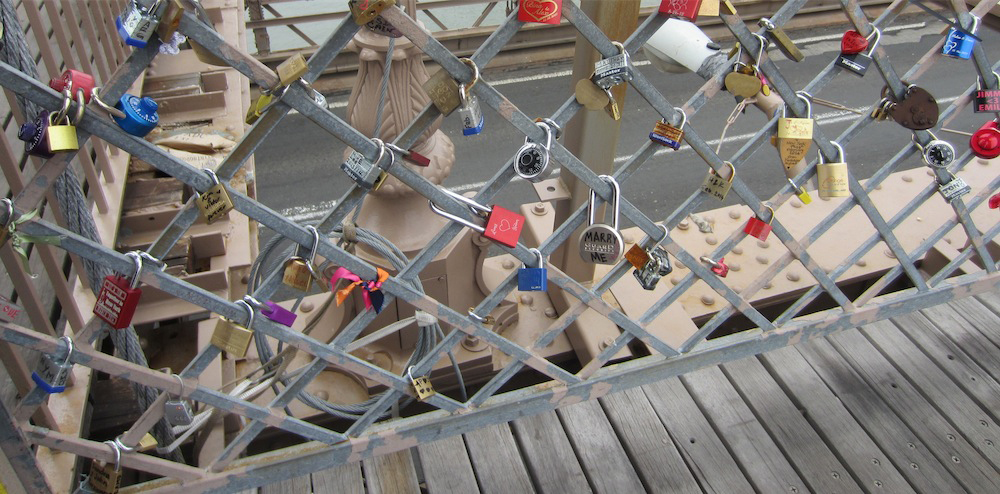
Example 1: “locks”
“Great guesses, but I’m afraid those things did not happen. I actually saw hundreds of locks on the Brooklyn Bridge when I was walking across it. I’ve been on the Brooklyn Bridge before, but I haven’t seen locks attached to it. When I looked closely at the locks, I noticed that many couples had engraved their names and wedding dates on them. I’d like to know more about the locks. Do you want to help me solve the mystery?”
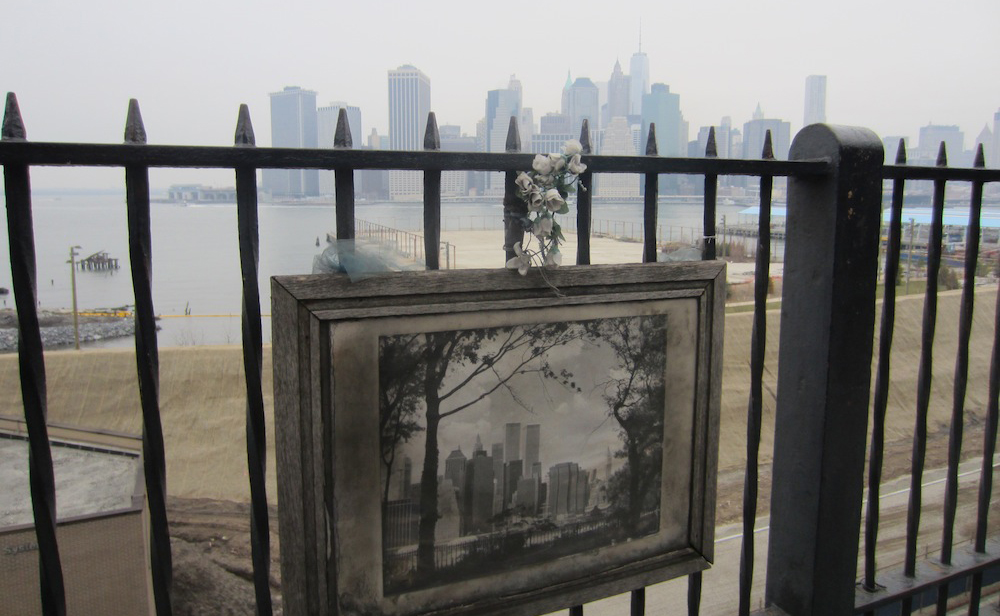
Example 2: painting
“Sorry! Those things didn’t happen. When we were exploring Brooklyn Heights, we came across an old painting that was tied to a fence. It had the Twin Towers in it. When we looked directly across the water, we saw the new One World Trade Center tower. It was an eerie feeling. I am sad that I never got to see the Twin Towers. I’d like to know the story behind the painting. It’s a mystery to me.”
6. Your Turn!
Now, have your students create their own word cloud travel memories. Put students in pairs or small groups and repeat the activity. If your students have blogs, have them do this activity online. Here’s an example of how I do this activity on a blog. This is from my first trip to NYC. Go unravel some travel stories!
Cheers,
Tara
PS – You or your students can ask me questions about my other words in the comments. I’d love to respond.
Find this week’s featured lesson about the Great Pyramid in the Discovery Center – Famous Places.
Sprout English’s Discovery Center has many other interesting facts for kids to discover! Discover 36 lessons about animals, food, transportation, famous places, interesting jobs, and sports.


Purchase a subscription to access all our Young Learner resources. Only $7 a month.

