Alphabet Name Game

This week’s Spotlight lesson is Alphabet Review from our Phonics Cafe – Book 2 section. Young English language learners will find 23 pages of printing practice for uppercase and lowercase letters, along with fun illustrations and exercises. After reviewing the alphabet on paper, why not try some oral practice with your students? The following activity is a simple one, but one I use again and again with my students because of the specific letter-sound focus. The instructions below tell you how to play with country names, but you can easily change the theme to suit whatever you’re studying in class (animals, food, etc.). (more…)
Alphabet Review

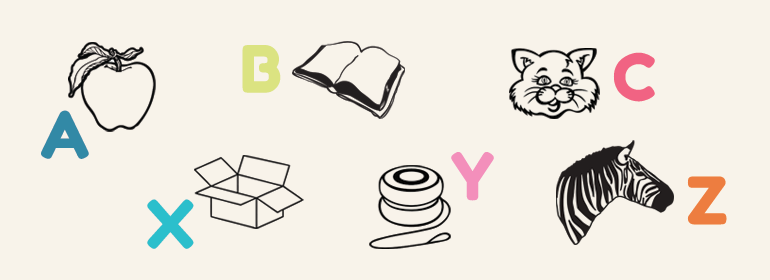
Teachers and parents, are your kids learning to print the alphabet? This week’s Spotlight lesson features a comprehensive Alphabet Review from Book 2 of our Phonics Cafe section of lessons. Young English language learners will love the colorful illustrations and engaging activities!

This 23-page phonics lesson can be broken up and done over several days so that your learners get as much practice as they need. You can use this lesson on its own to teach students how to print uppercase and lowercase letters, or as a review to the phonics lessons in Book 1 (which are divided up into smaller sections: A–F, G–L, M–R, and S–Z). The printing exercises in Alphabet Review are interspersed with a variety of fun activities (such as exercises matching the letters to sounds) so that kids will get ample practice recognizing, saying, and printing these letters without getting bored!  (more…)

Comparative Adjectives for Describing People

In English, we use adjectives to describe nouns (people, places, or things). What about when we want to compare two nouns? Comparative adjectives are useful to learn so that students can compare different things. There are a few rules for forming comparative adjectives, which your students can learn in our new Comparative Adjectives lesson (in the Grammar School section of Sprout English). Once students have learned these rules, get them to practice using this worksheet on describing people. On Thursday, Tara will blog about a fun activity for comparing people, so be sure to check back then!

You’ll find two worksheets, one with blank spaces for students to fill in the comparative form of the adjectives, and another with the answers already filled in. You can use the one with the answers as an answer key for students to check their work themselves or as a handy reference sheet for Thursday’s activity. (more…)

Comparative Adjectives

Is sushi tastier than pasta? Our brand-new Comparative Adjectives lesson gives young learners a lot of practice comparing people, places, and things.

This colorful, eight-page lesson starts off with a simple grammar explanation. This is followed by a variety of activities such as a fill-in-the-blanks exercise, a spot-the-errors exercise, and a pair work exercise that are sure to engage your students. There is also a bonus page on spelling rules for adjectives ending in -er that you can hand out and review with your students if needed. (more…)

50+ Grammar, Vocabulary & Pronunciation Resources for Teaching Young ELLs

Time flies when you’re having fun! When you enjoy blogging about grammar, teaching, and the English language as much as I do, a year of weekly blog posts goes by just like that! Our goal at Sprout English has always been to provide quality educational materials to English teachers and students, and my personal wish is that teachers and students will continue to learn from and use our free blog materials. We love helping young learners grow their English skills!

I thought it would be helpful to organize all the articles I’ve written so far into a list that’s easily accessible. (Some articles are included twice if they belong to more than one category.) I hope you find this resource list useful! (more…)

Simple Present Vs. Present Progressive – Grammar Worksheet

Students learn the simple present and present progressive verb tenses early on in their English language studies. The problem is that most textbooks don’t present these tenses together! It’s easy enough to remember the conjugation of one tense and practice it over and over. It’s quite another when both tenses appear in the same context—that’s when students really have to understand the differences in order to use the correct tense. Our Spotlight lesson this week, Pako – Simple Present / Present Progressive Reading, uses both tenses in the story so that students can see them compared and contrasted.

We’ve got many resources to help your learners figure out the differences between these tenses. Go over our free, printable grammar chart on the simple present vs. present progressive with your students, then print out the worksheet below and see how they do. If they are still confused, try some of our other resources at the end of this post!

Download the grammar worksheet PDF (more…)

Pako – Simple Present / Present Progressive Reading

The present tenses are fairly simple to master on their own, but students can get confused when they’re paired in the same context. Seeing the simple present and present progressive together in the same text really helps students figure out when to use each one. This week’s Spotlight lesson, Pako, features a reading and exercises that use both tenses. (more…)

Adjectives for Describing the Face

Our Spotlight lesson this week is The Face, a fun and colourful vocabulary lesson from our Word Bank – Describing People & Things section. As a follow-up and expansion, try teaching some common adjectives that your students can use to describe the face and hair. You can also use these adjectives with Tara’s vocabulary activity (which will be on our blog on Thursday). Scroll down to the end of this post for examples, sentence patterns, and a discussion on comma placement with multiple adjectives.

Eyes (more…)

The Face

Learning vocabulary thematically helps students remember new words more easily. Repetition that’s varied and engaging is also helpful. The lessons in our Word Bank are grouped by theme and contain eight pages of fun, colourful exercises each! We’ve just created a NEW vocabulary lesson for your young learners on The Face.

The Face includes a colorful picture dictionary, matchup, word choice, word search, word scramble, and spelling bee. This lesson covers all the basic parts of the face as well as some more detailed parts such as eyelids and eyelashes. Discussion questions at the end allow your students to practice the new vocabulary in context. (more…)