Past Progressive Game for Young Learners: What Were You Doing?

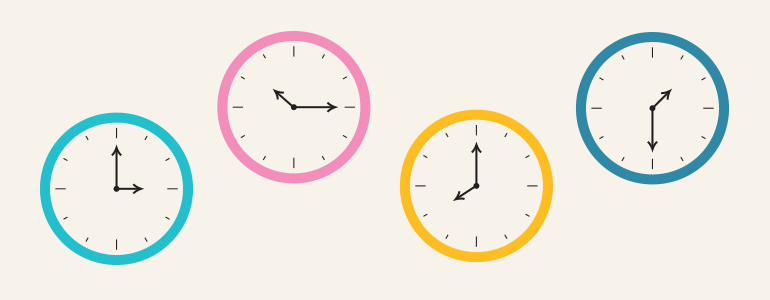
This week in the Spotlight, we’re featuring a lesson from our Library on the Past Progressive. An easy way to start practicing the past progressive is with clock times. Kids love talking about themselves and their lives outside of the classroom. Try this activity after you’ve reviewed the structure of the past progressive.

Preparation: Print and Cut

Print this FREE 3-page PDF to use with the “What were you doing?” activities below.

Page 1: Print as many copies as you need of the Time of Day sheet. Cut the clocks out, and give each student one or more clocks to fill out. Have an envelope or container handy to put the clocks in after students write times on them.
Page 2: Print one page of Days of the Week strips for the class and cut them into strips. Place them in an envelope or container.
Page 3: Print one Day Planner page for each student for the Personal Assistants activity.

Past Progressive Activity (more…)

Odd One Out: 5 Silly Activities for Very Young English Learners

Young kids often giggle when they see things that don’t seem quite right! Get your youngest English learners giggling (and learning) with these silly Odd One Out games and activities.

Dizzy Doodlers

You will need: Whiteboard markers or chalk and a board

1. Think of a category or theme that you have been working on with your students, such as “shapes” or “animals”. Don’t tell the kids the theme.
2. Invite four students up to the board. (your first set of doodlers)
3. Choose three related words from your category (e.g., monkey, hippo, bear) and one unrelated word (e.g., can of soup). Assign all of the students at the board one of the words you chose. If they don’t know the word in English, you can translate it.
4. Before the students start drawing, spin them around once or twice (to get them a bit off balance).
5. Give the kids a short amount of time to create their drawing.
6. When the drawings are finished, ask the class this question:

Who’s the Dizzy Doodler?
In other words, which student drew the picture that doesn’t belong in this collection? Have your students identify each drawing as well as the category or collection the drawings belong in. Which category or collection would the odd picture belong in? (more…)

End-of-Year ESL Activity: Obstacle Courses


My daughter, who isn’t really into sports, recently told me that she only likes gym class when they get to play sports that their teacher invents, such as “benchball”. She was surprised to hear that basketball was created by a gym teacher, and that it used to be played with peach baskets. My son loves anything to do with sports, but right now he’s obsessed with a running race challenge he invented at school. “You get to make up a new name for yourself every day, and every day is a new season. You have to win five races in a row before you’re crowned the champion!”

The idea of inventing anything (and making up the rules) is something kids get really excited about. This is why so many kids love obstacle courses! The end of the school year is a great time to have play days with obstacle courses. You can celebrate all of the obstacles that your students have overcome! Obstacle courses are useful for language learners because they can review vocabulary related to sports equipment and actions. They can also practice giving, writing, and listening to instructions.

Whether you are a teacher or a parent, here is an Obstacle Course Activity to try with your young English learners :

Warm-Up Questions

First, teach the word “obstacle course” and consider how it relates to language learning:
How is learning a language like going through an obstacle course?

  • It’s mentally challenging.
  • You have to figure out how it works.
  • You can’t move too quickly.

Next, talk about some of the specific obstacles language learners face:
What are the difficult parts (obstacles) in learning a language?

Mother’s Day Video Fun: Animals and Babies

Kids love learning about animals! At the dinner table last week, I challenged my own kids to name as many animals as they could (without reaching for the iPad). We grabbed an old-fashioned pen and notepad, and they came up with 217 types of animals in 45 minutes. As they proudly named all of the animals they could think of, they shared interesting facts they had picked up while reading and watching videos about strawberry poison dart frogs, dusky dolphins, and other obscure animals! I was a proud mama. My little cubs have learned a lot since the early days when we used to sing the Sleeping Bunnies song over and over.

If you’re looking for Mother’s Day themed ideas for the classroom, this is the perfect time to talk, sing, and learn about animals and their babies. In the Spotlight this week, we have a NEW Word Bank lesson plan about Animal Families. After you’ve tried the lesson, here are some questions and related videos to share in class this week. You’ll notice in some of the videos that animal mothers are the best teachers! It’s no wonder Teacher Appreciation Week ends on Mother’s Day!

What Are Some Names of Animal Babies?


(more…)

Pronunciation Practice: Name Games

Over the weekend I played a fun getting-to-know-you-better game with my own children. We each wrote ten questions, and then guessed how we thought the other person would answer. I was surprised to discover that my son knew me better than my daughter (based on the ten questions I picked). It didn’t surprise me that my kids knew each other better than I knew them!


One of the questions I included on my list was, “What’s your favorite name?” My kids thought it was hilarious that I chose my own name (Tara) as my favorite name. My son guessed that I would pick my daughter’s name (firstborn) and my daughter guessed that I would pick the name of the main character in the novel I wrote. The truth is, your own name is the sweetest name you’ll ever hear (even if you don’t love it). According to research, if a business uses your name, and pronounces it correctly, you are more likely to go back and do business again. You are also more likely to make friends with a person who remembers your name (and says it properly). Hearing your own name pronounced incorrectly (or having someone call you the wrong name), however, has the opposite effect.

If your students are just learning each other’s names, or if you’re starting a class with a new group of students, explore some different ways to practice the pronunciation of each other’s names. Here are some fun activities to try:

My Favorite Name

First, ask your students to write down their favorite name on a scrap piece of paper. Tell your students that you won’t take any questions (some students will want to ask if they can choose their own name). Next, ask your students to hold up their papers. Count how many people picked their own name and have a discussion about it. (more…)

Easter Colors: An Eggcellent Easter Activity

Do you use Pinterest for inspiration when you’re looking for crafts to do in the classroom? Pinterest is full of holiday craft ideas, and with a little creativity, you can easily find ideas that can be combined with language learning.

Last weekend I went hunting on Pinterest to find ideas on painting eggs with nail polish. One of my daughter’s favorite games right now is “Name the Nail Polish”. We gather all of our bottles of nail polish and put them in her glittery treasure box. She pulls the bottles out one by one and we take turns coming up with fun names for the colors. Twinkle Twilight…Party Perfect…Salmon Suede…Confetti… Sometimes we play this game out loud together, and other times we write the words down and compare the color names. We’ve played this game with up to four people (boys included), and it works best when we have lots of different colors (at Auntie K’s). Sometimes we even vote on the color names to see which ones we like best. When we’re done, we look at the bottom of the bottles to see what the real names are.

I was delighted that my “nail polish Easter eggs” search on Pinterest brought up so many ideas for coloring eggs. There were ideas for painting real eggs as well as plastic eggs. I was skeptical that nail polish and water would work well on plastic eggs, but was excited to find out that it actually worked when I tested it out!

This particular idea, “You’ve Been Egged” would make a great classroom activity or weekend project. You could “egg” another classroom at your school, or invite your students to “egg a neighbor” over the Easter weekend. Here is a handout you can give your students if you want them to do this activity at home. *

You will need: (more…)

Guess the Travel Memory: Word Cloud Game

“I dislike feeling at home when I am abroad.” ~ George Bernard Shaw

This week’s Spotlight lesson plan is all about the Great Pyramid of Giza. Have your students traveled to interesting places? Do they enjoy learning about mysteries?

One way to have fun with mysteries is to have your students make word clouds about their vacations and travels. I play a word cloud guessing game with my online learners every time I go on a trip. We do this activity together on my teaching blog, but it can also be done in pairs or small groups in class with a printout or handmade word cloud. The best way to play this game is to demonstrate once (as the teacher) with your own travel memories. Your students will love getting to know you better by learning about a trip you took.

1. Brainstorm

Brainstorm about ten interesting memories from a trip you’ve taken. Look through your photographs for ideas.

2. Make a List

Write a word or two to represent each memory. It can be a noun, verb, adjective, or short phrase. (If you have pictures of these memories, bring them in to class!) I just returned from a trip to New York City. Here are my words. (more…)

Where Is Sprout? Games for Practicing Prepositions of Place

“Come out, come out, wherever you are!”

Do your students enjoy playing hide-and-go-seek? Do you know how to make this game educational? Hide-and-go-seek is the perfect game for practicing prepositions of place. If you haven’t already introduced these little words and phrases to your English learners, check out Tanya’s useful post. It’s full of teaching tips on prepositions of place (and directions), including this FREE handy handout.

1. Warm-Up

After you’ve introduced prepositions of place to your students, you can review them by showing this funny series of visuals. Simply ask this question: Where is the child hiding? Go over some of the different prepositions from the pictures.

under the bucket, behind the curtain, in the cupboard, behind the towel, beside the crib…

(more…)

3 FREE Activities for St. Patrick’s Day


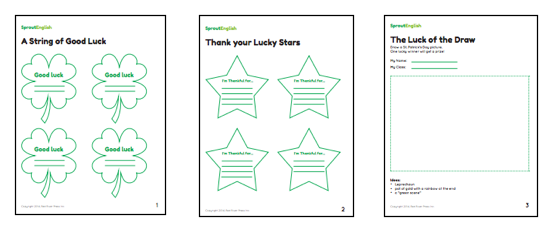
Are you looking for some fun St. Patrick’s Day activities to hold at your green party on Monday? You are having a green party, aren’t you? At a green party, the students dress in green, eat green food, and drink green beverages. You can serve green milk and cookies, or green cupcakes and juice. You’ll also need some fun St. Patrick’s Day activities! Before you try these ones, be sure to introduce your young learners to our St. Patrick’s Day poster of idioms. Make sure that they understand the idiomatic meanings before you introduce these activities. (These activities play on the “literal” meaning of the words, as the poster does. It will help them remember the expressions.)

FREE Activities for St. Patrick’s Day

Print out this handout to eliminate prep work. This is a party after all! Photocopy as many copies as you need! You’ll also need string, scissors, clothes pegs (or paperclips), and coloring utensils (lots of green).
(more…)

Writing Activity: My Acceptance Speech

“This is a terrible mistake, because I used up all of my English!”

~ Roberto Benigni, accepting his Academy Award for Best Actor in “Life is Beautiful” (2010)

Did your students watch the Oscars this week? What was their favorite part? Did they enjoy watching the stars on the red carpet, or the live musical performances? Maybe they got a kick out of Ellen’s selfie that broke Twitter, or the pizza man who brought Brad Pitt and his friends pizza!

I often let my daughter stay up late to watch awards shows like the Oscars or Grammys. She’s a dreamer with big aspirations, and I think it’s important for kids to see people achieving their dreams. While my daughter’s favorite part of awards shows is seeing the pretty dresses (her dolls were all dressed up for the occasion this year), my favorite part is always listening to the acceptance speeches. Who are the winners going to thank, and why? What secrets do they have for dreamers who are still trying to achieve their goals?

This year Jared Leto, winner of Best Supporting Actor, gave the best speech! Here is the transcript of Leto’s speech. His speech told a story, and it came from the heart. It captured the audience’s attention, and he didn’t rely on a crumpled up piece of paper.

An Inspiring Video

One of the most memorable speeches in the history of the Academy Awards was delivered by Robert Benigni in 2010. (more…)