“th” Words: Phonics Lesson

The /th/ sound (/θ/ for the voiceless sound and /ð/ for the voiced sound, written phonetically) is not common in many other languages, so English language learners usually struggle with this sound. I’ve found that encouraging students (both children and adults) to “stick out their tongues” (put their tongues between their teeth) is a fun way to get them to practice making this sound. Our phonics lesson on “th” words will have your students pronouncing and spelling words like month, thanks, these, and father in no time! (more…)

Silent E, Evil E, Magic E: Videos and Songs

I’ll never forget the day my son came home and told me all about how evil the letter ‘e’ can be. He taught me that the letter ‘e’ sometimes goes at the end of words and makes the vowels say their names. How rude! While I remember learning about Silent ‘e’ (worked for me), I’ve since learned that there are many other names for this trickster of a letter, including Evil E and Bossy E.

Are you using Sprout English’s Spotlight Phonics lesson in class this week? Have you reviewed Tanya’s pronunciation tips? Here are some fun songs and stories to share with your learners to get these rules to stick!

Evil E

“Say it Vowel! Say your name!”
Young kids act out a funny play with letters and demonstrate how ‘e’ hops over other letters and makes the vowel in front say its name. Evil E is bit of a bully, isn’t he?

(more…)

Silent ‘e’ Words: Pronunciation

Do your students have difficulty with the pronunciation of short and long English vowel sounds? There are some spelling rules that can help young learners recognize when a long vowel sound is needed. One such rule involves the final, silent ‘e’ in a word, and this is the focus of this week’s Spotlight lesson: Silent ‘e’ Words 1.

This lesson is one of four involving four-letter words with a silent ‘e’ ending. There are 11 pages of spelling and writing practice in the first lesson, but what about audio? Listening and oral repetition is essential for a good pronunciation lesson. The teacher can certainly model the words, but it’s a good idea to have another source for listening practice too. (more…)

Silent ‘e’ Words: Phonics Lesson

English spelling and pronunciation can be difficult to master, but we can help! Sprout English has four lessons on words ending in the unpronounced final ‘e,’ a little letter that greatly affects the pronunciation of the main vowel of a word. This week’s Spotlight lesson is Silent ‘e’ Words 1. (more…)

Alphabet Review

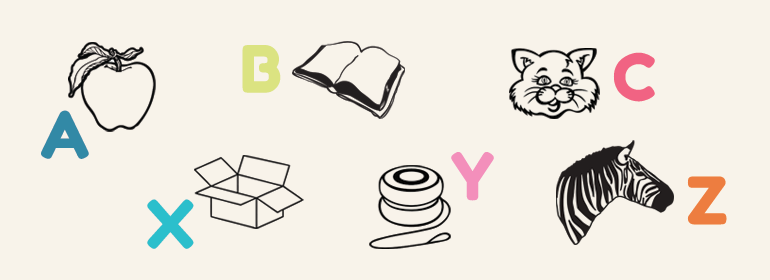
Teachers and parents, are your kids learning to print the alphabet? This week’s Spotlight lesson features a comprehensive Alphabet Review from Book 2 of our Phonics Cafe section of lessons. Young English language learners will love the colorful illustrations and engaging activities!

This 23-page phonics lesson can be broken up and done over several days so that your learners get as much practice as they need. You can use this lesson on its own to teach students how to print uppercase and lowercase letters, or as a review to the phonics lessons in Book 1 (which are divided up into smaller sections: A–F, G–L, M–R, and S–Z). The printing exercises in Alphabet Review are interspersed with a variety of fun activities (such as exercises matching the letters to sounds) so that kids will get ample practice recognizing, saying, and printing these letters without getting bored!  (more…)

Pronunciation Practice: L & R

This week’s Spotlight lesson is our Phonics lesson: M to R, which gives low-level learners printing and pronunciation practice. The letter “R” inspired me to write this post on perhaps the trickiest bit of pronunciation in English: the /r/ sound. I’ve had students from all over the world struggle to pronounce /r/ as we do in English! Minimal pairs with /l/ and /r/ can be especially difficult for English language learners, so I thought I’d include some practice in my blog post today.

Tongue position:

What position does the tongue need to be in to form the /l/ and /r/ sounds in English? In most languages, including English, the /l/ sound is produced with the tip of the tongue against the back side of the front teeth. The tongue “flaps” or flicks outward when making the /l/ sound. Most students have no problem making the /l/ sound.

The /r/ sound, in most languages other than English, is made with the tip of the tongue near the front teeth (similar to the /l/ sound in English). The tongue often flaps or trills in this position. The English /r/, however, calls for the tongue to be much farther back in the mouth. The tongue stays flat and doesn’t move up and down. (See the pronunciation tips section below for more /r/ pronunciation info to give to students.) (more…)

Phonics Lesson: M to R

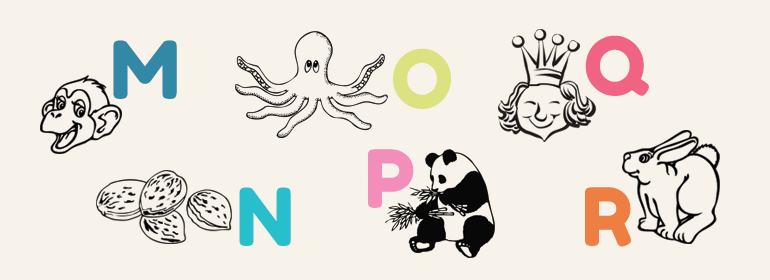
Sprout’s Phonics Cafe section offers many lessons to help improve low-level English learners’ printing, writing, spelling, and pronunciation. This section starts with the alphabet and works up to letter combinations and words that are difficult to pronounce and spell. This week’s Spotlight lesson is on the letters M to R. Your students will love the colorful illustrations and engaging activities!

This 20-page phonics lesson can be broken up and done over several days so that your learners get as much practice as they need. It starts off with simple printing exercises for the uppercase and lowercase letters M through R. The colorful images also give learners a chance to practice their pronunciation. (more…)

Pronunciation of “ph” & “wh” Words

English spelling and pronunciation can cause a lot of difficulties for English language learners! That’s because English spelling often doesn’t match the pronunciation. English has gone through many sound changes over time, and we’ve kept some of the older spellings that don’t reflect the current sounds. Did you know that while many languages only have 5 vowel sounds (a, e, i, o, u), English has 26 vowel sounds? No wonder it’s tough to learn how to spell and pronounce English words correctly!

Two tricky sounds are those spelled with “ph” and “wh”. “Ph” is pronounced as an /f/ sound, and “wh” is pronounced as a /w/ sound, and neither include the /h/ sound! This week’s Spotlight lesson was on
“ph” & “wh” Words, so I decided to record the words from this lesson on the blog this week. (more…)

“ph” & “wh” Words

The English spelling system is one of the most difficult of all the world’s languages. Our spelling of a word often doesn’t match the sound of the word. Two such sounds are “ph” words and “wh” words, such as “phone” and “whale”. Luckily, we’ve got a lesson devoted entirely to the spelling and sound of “ph” and “wh” words! Your students will be writing and pronouncing these words correctly in no time.

This 16-page phonics lesson can be broken up and done over several days so that your learners get as much practice as they need. It starts off with writing/spelling and speaking exercises and moves on to other grammar points such as Prepositions and Wh Questions about time and place. The colorful images and variety of activities mean your students won’t get bored! (more…)