The Classroom: Vocabulary Lesson

Are you heading back to school this week? We’ve created a new lesson on Classroom Vocabulary to help your young learners feel more comfortable in class!

In this Word Bank lesson, students will learn the spelling and pronunciation of common objects in the classroom. They will practice this vocabulary through several fun, colorful activities, including a picture dictionary, matchup, word choice, word search, word scramble, and spelling bee. This lesson finishes up with discussion questions so that your students can practice using the vocab in context. You could choose to put students in pairs or groups for most of these activities—the more they get to know each other, the more comfortable they will feel! (more…)

African Animals

Go wild with our new lesson on African Animals!

In this eight-page Word Bank lesson, students will learn the spelling and pronunciation of their favorite African animals. They will practice this vocabulary through several fun, colorful activities, including a picture dictionary, matchup, word choice, word search, word scramble, and spelling bee. This lesson finishes up with discussion questions so that your students can practice using the vocab in context. These activities are suitable for individual, pair, group, or class work—the choice is yours! (more…)

Hobbies

What do your young learners like to do in their free time? Our NEW Hobbies lesson introduces students to vocabulary they can use to describe common hobbies and leisure activities. (more…)

Independence Day & Canada Day Vocabulary Lessons

Have you seen the Canada Day and Independence Day vocabulary lessons in our Word Bank section? Canada Day is a federal holiday celebrated on July 1 that commemorates the signing of the Constitution Act on July 1, 1867. Independence Day, also known as the Fourth of July or July Fourth, is a federal holiday that commemorates the July 4, 1776, adoption of the Declaration of Independence. If you live in, teach in, or hail from Canada or the US, your students will be interested in these festive lessons! (more…)

Weather & Seasons

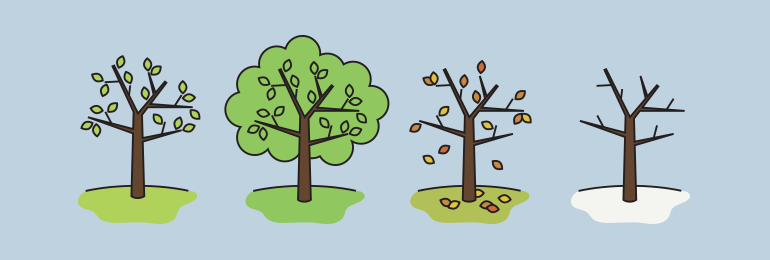
Everyone needs to know how to talk about the weather. In the NEW Weather & Seasons lesson in our Word Bank section, we introduce young learners to vocabulary they can use to describe all kinds of weather. They’ll also learn about the four seasons!

In this English lesson, we were sure to include as many of the variations that students will encounter as possible. For example, we include both noun forms of the seasons (e.g., summer / summertime). We also mention the different parts of speech that weather words can take (e.g., I don’t like the rain; It’s a rainy day; It’s raining). (more…)

Family Vocabulary Lesson

Many countries will celebrate Mother’s Day this Sunday, May 10. In honor of this special day, you may want to try our reformatted Family vocabulary lesson in class this week!

In this eight-page Word Bank lesson, students will learn the names of immediate family members as well as some extended family. (more…)

Simple Past

What did you do yesterday? The simple past is a fundamental building block of English grammar that young learners should learn early on. Our revamped Simple Past lesson makes it easy and fun to teach this common verb tense! (more…)

Environmental Idioms for Earth Day

“The best time to plant a tree was 20 years ago.
The next best time is today.”
—Chinese proverb

Earth Day is on April 22, and it’s a great day to learn idioms about the environment! Visuals like this poster can really help students remember new vocabulary and idioms. For other ways to practice idioms, see Tara’s suggestions in 8 Fun and Interactive Ways to Review Idioms. Try our blank idioms poster as an idiom quiz or vocabulary review. Related vocabulary for this poster could include overfishing, pollution, waste, consumerism, overspending, recycling, composting, deforestation, and global warming.

Vocabulary Baseball Game


Are you looking for fun ways to review vocabulary? This vocabulary game can be played with all ages and levels. It may last a whole week or just 15 minutes. Keep score as your students work through nine innings. Unlike real baseball, no equipment (and no running) is necessary! (more…)