Independence Day Handwriting Activity – Sign Your John Hancock


Independence Day is coming up on July 4, and Sprout English has a NEW Word Bank lesson for you to try. If you’re looking for another Independence Day idea, here is a fun listening and handwriting activity.

Many teachers no longer teach cursive in the classroom. Even if kids don’t learn cursive, they should still learn how to sign their own names. Introduce your students to the expression “Sign your John Hancock” with this short listening activity. (more…)

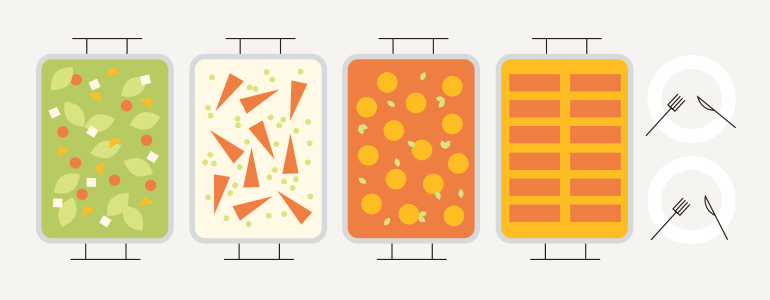
Countable or Uncountable Food: Our Buffet


Whenever people ask my daughter about her trip to Myrtle Beach she always mentions the seafood buffet. It had crab legs and prawns and lobster. But like most buffets that cater to families, it also had chicken fingers and pizza! (Should I mention all-you-can-eat ice cream?)

Here is a fun activity to try with your students if you’re doing a food-themed unit. This activity is useful for practicing countable and uncountable nouns. You can also use it to review “some” and “any”.

Our Buffet

1. Introduce the word “buffet” to your students. Help them with the proper pronunciation of this word. (more…)

Some Vs. Any

Do your students get confused by all of the different quantifiers in English? There are many ways to indicate the amount of a noun, including using words like many, much, a lot, lots, some, several, a few, a couple, etc. The common term some is used when we want to indicate an amount that is not too much and not too little. But can we use some in all types of English sentences, including positive statements, negative statements, and questions? Sometimes we need to use any instead, and that can be a source of confusion for English language learners! Teach your students the differences using the tips below, and get them to try the practice exercise below.

Some

In English, we usually use some in positive sentences. Some is used with both count (countable) and non-count (uncountable) nouns.

Examples: (more…)

Story and an Idiom: A World Cup Listening Activity

Are your young learners excited about the World Cup? Sprout English has a NEW Word Bank lesson plan on Football (a.k.a. Soccer) that is designed for young learners. After you’ve tried the lesson, why not share this related story with your students? This story teaches the idiom “on the ball”.

The Dog That Was On The Ball


Once upon a time, there was a dog named Pickles. The dog was out for a walk with its owner when it spotted an object in a garden. The object was wrapped in some newspaper. The dog’s owner picked up the object. It was a trophy. This was not just any trophy. It was the missing World Cup Trophy! Earlier that week, a thief had stolen the trophy from a museum in London. (more…)

Using the World Cup’s Yellow Card/Red Card System for Classroom Management

Will your students be watching the World Cup this year? The 2014 FIFA World Cup takes place in Brazil from Thursday, June 12 to Sunday, July 13 with 32 teams competing. The world is abuzz with excitement! Did you know that soccer is the world’s most popular sport? It is played by 250 million players in over 200 countries. It even has two different names—it is known as “soccer” in Canada and the US and “football” to the rest of the world.

Classroom Management

Classroom management can be an ongoing challenge at the best of times. When everyone is excited about something shared the world over, it can be even more difficult to keep the peace. At my old school, we used a red card/yellow card management system during the World Cup. This worked very well because it got everyone into the spirit of the games while also reminding everyone that misbehaving wouldn’t be tolerated. (See chart below.)

Yellow Card/Red Card System (more…)

Music Activity for Young English Learners: Drumroll, Please!

Do your young learners love singing, clapping, and dancing to the music? Young kids are natural music lovers. Research suggests that our taste for a specific kind of music gets stronger with age. In other words, when we’re young, we’re tolerant of many types of music.

Listeners of any age appreciate the unexpected when it comes to music. This is why we pay attention when we hear an acoustic song that we are used to hearing with electronic instruments. We also take notice when a female sings a song originally recorded by a man. Mixing things up, especially when it comes to music, is the key to staying interested!

Here is a fun activity to try with your young learners. It includes a drum craft followed by a singing activity.

Make Some Drums

Choose one of the following recipes for making handmade drums with your students. (more…)

How to Start a Paragraph

Most English language learners struggle with writing, and it often goes beyond being unsure about grammar and vocabulary. More importantly, they might be unfamiliar with the structure of a paragraph or an essay. How to Write a Paragraph includes a sample paragraph and tips that will give your students some guidance. But what about actually starting that paragraph or essay? Sometimes getting started is the hardest part! Below are two common techniques that students can easily use to pull readers into their writing and get their pens moving (or their fingers typing).

Start it with a question…

This is a great technique to grab readers’ interest. Have students come up with a question that’s related to their topic. A question like this helps students think about what they want to answer/address in their paragraph/essay, and lets readers know what to expect from the writing.

Common ways to start such a question are: (more…)

Past Progressive Game for Young Learners: What Were You Doing?

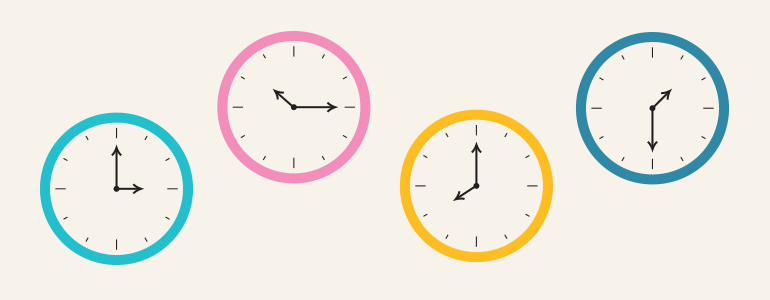
This week in the Spotlight, we’re featuring a lesson from our Library on the Past Progressive. An easy way to start practicing the past progressive is with clock times. Kids love talking about themselves and their lives outside of the classroom. Try this activity after you’ve reviewed the structure of the past progressive.

Preparation: Print and Cut

Print this FREE 3-page PDF to use with the “What were you doing?” activities below.

Page 1: Print as many copies as you need of the Time of Day sheet. Cut the clocks out, and give each student one or more clocks to fill out. Have an envelope or container handy to put the clocks in after students write times on them.
Page 2: Print one page of Days of the Week strips for the class and cut them into strips. Place them in an envelope or container.
Page 3: Print one Day Planner page for each student for the Personal Assistants activity.

Past Progressive Activity (more…)

Odd One Out: 5 Silly Activities for Very Young English Learners

Young kids often giggle when they see things that don’t seem quite right! Get your youngest English learners giggling (and learning) with these silly Odd One Out games and activities.

Dizzy Doodlers

You will need: Whiteboard markers or chalk and a board

1. Think of a category or theme that you have been working on with your students, such as “shapes” or “animals”. Don’t tell the kids the theme.
2. Invite four students up to the board. (your first set of doodlers)
3. Choose three related words from your category (e.g., monkey, hippo, bear) and one unrelated word (e.g., can of soup). Assign all of the students at the board one of the words you chose. If they don’t know the word in English, you can translate it.
4. Before the students start drawing, spin them around once or twice (to get them a bit off balance).
5. Give the kids a short amount of time to create their drawing.
6. When the drawings are finished, ask the class this question:

Who’s the Dizzy Doodler?
In other words, which student drew the picture that doesn’t belong in this collection? Have your students identify each drawing as well as the category or collection the drawings belong in. Which category or collection would the odd picture belong in? (more…)