
What did you do yesterday? The simple past is a fundamental building block of English grammar that young learners should learn early on. Our revamped Simple Past lesson makes it easy and fun to teach this common verb tense! (more…)
What did you do yesterday? The simple past is a fundamental building block of English grammar that young learners should learn early on. Our revamped Simple Past lesson makes it easy and fun to teach this common verb tense! (more…)
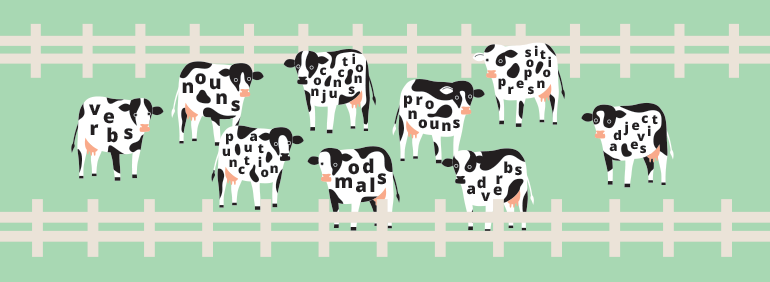
It’s National Grammar Day on March 4 in the US! Thanks to social media, other countries are getting in on the act too. And really, any day is a good day to improve your grammar! That’s why I decided to round up all the past grammar posts that I’ve written for Sprout English into one place. They are divided up into posts on verbs, other grammar points, and holidays. It’s my hope that teachers of young learners or students studying on their own can benefit from the tips, explanations, and charts in these blog posts. (more…)

This week’s Spotlight lesson, Haul Video, features a fun reading that uses the simple present, simple past, and simple future tenses in context. Your students will hear “be going to” used naturally as they listen to Daisy make a video about her recent shopping trip. (more…)

The past progressive (or past continuous) is an English verb tense that’s not used very often, so students are usually unclear about when to use it or how it compares to the simple past. Seeing the simple past and past progressive together in the same text really helps students figure out when to use each one. This week’s Spotlight lesson, UFO Report, features a reading and exercises that compare both tenses. (more…)
The differences between the present perfect and the present perfect progressive can be subtle, and many students aren’t sure when to use each one. Luckily, both are correct in most cases, but students still want to understand why there are two tenses with such similar uses.
The worksheet below has charts and examples so students can compare these two tenses side by side. For the other use of the present perfect and to compare it with the simple past, see Teaching the Present Perfect. (more…)

The present tenses are fairly simple to master on their own, but students can get confused when they’re paired in the same context. Seeing the simple present and present progressive together in the same text really helps students figure out when to use each one. This week’s Spotlight lesson, Pako, features a reading and exercises that use both tenses. (more…)

We are excited to present our NEW lower-level, simple present lesson on the verb “to be”! We’ve come up with a brand new template for this lesson, and we’d love your feedback! Please let us know what you think (what was useful, what was missing, etc.) in the Comments section below or through the Contact page on our website.
Introducing yourself in English is one of the first things students should learn. Our Simple Present – Be lesson in the Basic Grammar Structures section of the Grammar School gives students plenty of chances to practice this! (more…)
The simple future is a bit more complicated than the other simple tenses in English. There is more than one way of making a future verb. You can use the modal will + base verb, the modal expression be going to + base verb, or the present progressive form of be + -ing verb. What’s the difference between these forms? How can you teach them all to your students? In this post you’ll find information on the three future forms, a handy comparison chart that you can print out, fun activities using the future (for warm-ups or fillers), and links to practice exercises. 
COMPARISON CHART – 3 SIMPLE FUTURE FORMS (more…)
The simple past is a verb tense that students are introduced to fairly early on. It usually follows the simple present and the present progressive. It’s pretty hard to have a conversation in English without using the past tense. From sentences like “What did you do last weekend?” to “Did you watch that show last night?”, the simple past is essential to speaking as well as reading, writing, and listening. Try presenting the simple past to your young learners using the tried-and-true method below, which includes explaining the form and use, listing the time markers, giving examples, and using interesting lessons and fun activities to practice this common verb tense. There’s also a handy list of common irregular verbs at the end!
FORM:


