Do your young English language learners struggle with we vs. us? How about I and me? Remembering when to use subject and object pronouns can be challenging. Our NEW grammar lesson, Subject & Object Pronouns, makes it much easier! Students will also love the Family theme. (more…)
Author Archives: Tanya Trusler
Family Speed Game
Ready, Set, Guess!
Have your young English learners studied family vocabulary yet? Sprout English has two new lessons on the family: Family Vocabulary in the Word Bank and Subject & Object Pronouns in the Grammar School. After your students have learned basic family vocabulary, challenge them to this fun, fast activity!
Family Speed Game is one of my favorite ways to practice family vocabulary. My students love the competition that this brain-teaser activity provides! (more…)
Weather & Seasons
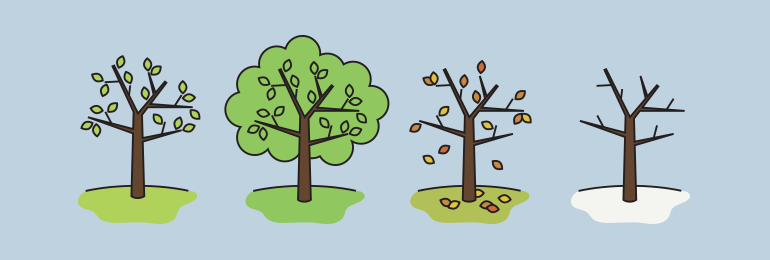
Everyone needs to know how to talk about the weather. In the NEW Weather & Seasons lesson in our Word Bank section, we introduce young learners to vocabulary they can use to describe all kinds of weather. They’ll also learn about the four seasons!
In this English lesson, we were sure to include as many of the variations that students will encounter as possible. For example, we include both noun forms of the seasons (e.g., summer / summertime). We also mention the different parts of speech that weather words can take (e.g., I don’t like the rain; It’s a rainy day; It’s raining). (more…)
The Living Room
Are your young English learners familiar with the vocabulary for objects in a home? We’re continuing to add to the Transportation & Housing section of our Word Bank. This week, we’re focusing on The Living Room! (more…)
Numbers: Phonics Lesson
Are your young learners learning to count? The Numbers lesson in our Phonics Cafe section gives students fun, engaging practice with both the numerical and spelled-out forms of the letters one to ten.
This seven-page phonics lesson begins by presenting the numerical and written forms of the numbers one to ten. This is followed by a variety of activities that will get your students reading, counting, and coloring. (more…)
Present Perfect
Have you ever studied the present perfect tense? We’re excited to promote our NEW lesson on the Present Perfect! We included grammar tips and charts to make this tense easy to teach and learn. We also included both functions of the present perfect along with exercises that compare it to the simple past. The Travel theme makes this lesson fun and relevant! (more…)
Family Vocabulary Lesson
Many countries will celebrate Mother’s Day this Sunday, May 10. In honor of this special day, you may want to try our reformatted Family vocabulary lesson in class this week!
In this eight-page Word Bank lesson, students will learn the names of immediate family members as well as some extended family. (more…)
3 Fun Ways to Use Irregular Verb Cards
Our Spotlight lesson this week was our Simple Past grammar lesson. When it comes to learning the simple past, students rejoice at the lack of subject-verb conjugation. Unlike the simple present, where students must add an -s to the end of third person singular subjects, the simple past has only one form for all subjects. There’s more good news when English language learners realize they must only add -ed to the end of the base verb to form the simple past for regular verbs.
However, irregular verbs can pose a problem for learners. How do they memorize all the various endings and changes that irregular past tense verbs take? Repetition is key, and if teachers can make it fun, students are more likely to want to practice! (more…)
Simple Past
What did you do yesterday? The simple past is a fundamental building block of English grammar that young learners should learn early on. Our revamped Simple Past lesson makes it easy and fun to teach this common verb tense! (more…)
Environmental Idioms for Earth Day
“The best time to plant a tree was 20 years ago.
The next best time is today.”
—Chinese proverb
Earth Day is on April 22, and it’s a great day to learn idioms about the environment! Visuals like this poster can really help students remember new vocabulary and idioms. For other ways to practice idioms, see Tara’s suggestions in 8 Fun and Interactive Ways to Review Idioms. Try our blank idioms poster as an idiom quiz or vocabulary review. Related vocabulary for this poster could include overfishing, pollution, waste, consumerism, overspending, recycling, composting, deforestation, and global warming.