Phonics Lesson: G to L

Sprout’s Phonics Cafe section offers many lessons to help improve low-level English learners’ printing, writing, spelling, and pronunciation. This section starts with the alphabet and works up to letter combinations and words that are difficult to pronounce and spell. This week’s Spotlight lesson is on the letters G to L. Your students will love the colorful illustrations and engaging activities! (more…)

“th” Words: Phonics Lesson

The /th/ sound (/θ/ for the voiceless sound and /ð/ for the voiced sound, written phonetically) is not common in many other languages, so English language learners usually struggle with this sound. I’ve found that encouraging students (both children and adults) to “stick out their tongues” (put their tongues between their teeth) is a fun way to get them to practice making this sound. Our phonics lesson on “th” words will have your students pronouncing and spelling words like month, thanks, these, and father in no time! (more…)

Reduced Pronunciation: Gonna

What are you gonna do on New Year’s Eve?

Though speaking quickly in another language can seem overwhelming at first, learning common language reductions (such as whacha, wanna, or gonna) can give students confidence in their speaking and listening abilities. My students always enjoy practicing reduced pronunciation—we’d have a lot of laughs together even when they’d get tongue-tied. Two things help learners feel more confident when practicing reduced pronunciation: guided practice with lots of modeling and handy tips to help them, and plenty of encouragement along the way. Remind students that even though reductions may sound like a whole other language at first, practicing reduced pronunciation means they’ll be able to better decipher quick, natural speaking when listening to native speakers, and they’ll sound more natural when speaking, too. (more…)

Spooky Halloween Fun for Young Learners

If you live in a country that celebrates Halloween, you’ll soon be surrounded by little witches, zombies, and pirates! With the focus on costumes and candy, it’s a given that kids love Halloween. Teachers can make the most of this time of year by decorating their classrooms, putting on a costume parade, and having pumpkin-carving contests. There are many ways to make Halloween educational as well. Read on for many spooky ideas! (more…)

How to Introduce Yourself in English

This week’s Spotlight lesson is our new Simple Present – Be lesson, where language learners can get a lot of practice introducing themselves. Introductions are one of the first things students need to learn to do in a new language. Feeling confident and comfortable doing so can go a long way to making language learning an enjoyable experience.

Like most (if not all) languages, there are a variety of ways to introduce ourselves in English, and we don’t want our students freezing up in the real world if they hear a variation from what they practiced in class. That’s why dialogues that show possible variations (such as the free, printable dialogue below) are great—students can see other ways of saying the target phrase and repeat the basic conversation several times without getting bored.

For listening practice and as a model before the students try it themselves, play the audio clip at the bottom of this post or ask for two volunteers. (more…)

Pronunciation of “ph” & “wh” Words

English spelling and pronunciation can cause a lot of difficulties for English language learners! That’s because English spelling often doesn’t match the pronunciation. English has gone through many sound changes over time, and we’ve kept some of the older spellings that don’t reflect the current sounds. Did you know that while many languages only have 5 vowel sounds (a, e, i, o, u), English has 26 vowel sounds? No wonder it’s tough to learn how to spell and pronounce English words correctly!

Two tricky sounds are those spelled with “ph” and “wh”. “Ph” is pronounced as an /f/ sound, and “wh” is pronounced as a /w/ sound, and neither include the /h/ sound! This week’s Spotlight lesson was on
“ph” & “wh” Words, so I decided to record the words from this lesson on the blog this week. (more…)

“ph” & “wh” Words

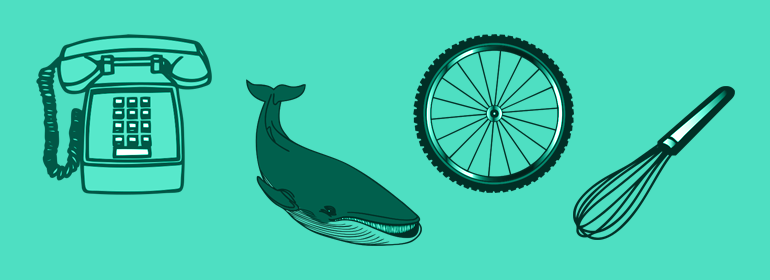
The English spelling system is one of the most difficult of all the world’s languages. Our spelling of a word often doesn’t match the sound of the word. Two such sounds are “ph” words and “wh” words, such as “phone” and “whale”. Luckily, we’ve got a lesson devoted entirely to the spelling and sound of “ph” and “wh” words! Your students will be writing and pronouncing these words correctly in no time.

This 16-page phonics lesson can be broken up and done over several days so that your learners get as much practice as they need. It starts off with writing/spelling and speaking exercises and moves on to other grammar points such as Prepositions and Wh Questions about time and place. The colorful images and variety of activities mean your students won’t get bored! (more…)

The Great Pyramid

Who doesn’t love a good mystery? With our lesson on the Great Pyramid, students can learn about this famous ancient wonder of the world and discuss some of the mysterious facts surrounding it.

The Great Pyramid lesson, in the Discovery Center, includes discussion questions, a short reading full of interesting facts, comprehension questions, vocabulary review (including an odd-one-out exercise and a matching exercise), and a word maze. There is even an optional black-and-white title page for your young learners to color. (more…)